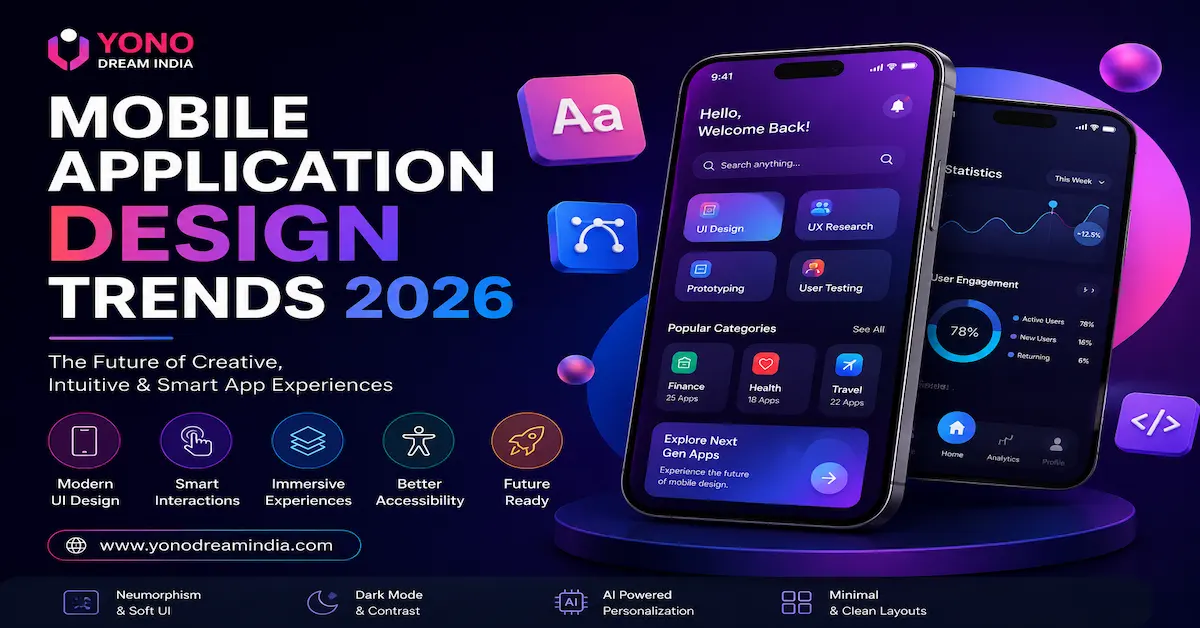
Mobile Application Design Trends 2026
Future UI • Smart UX • Accessibility • AI Design • Mobile Innovation
🌟 Editor's Pick: The Future of Mobile Design
Mobile application design is evolving rapidly with artificial intelligence, immersive user experiences, accessibility improvements, and smarter interfaces. The year 2026 is expected to introduce new design approaches that focus on simplicity, personalization, and performance.
🎨 Top Design Trends Shaping 2026
🤖 AI-Powered Personalization
Applications can adapt layouts and recommendations based on user behavior.
🌙 Enhanced Dark Mode
Modern dark themes improve comfort and visual consistency.
✨ Micro Interactions
Small animations improve engagement and create smoother experiences.
♿ Accessibility First
Inclusive design ensures usability for a wider audience.
📖 Design Evolution
Early mobile applications focused mainly on functionality. Modern applications now combine performance, visual appeal, accessibility, and personalization. The evolution of mobile design continues to improve user satisfaction and engagement.
📊 UI vs UX Comparison
| UI Design | UX Design |
|---|---|
| Visual Appearance | User Journey |
| Colors & Typography | Navigation Experience |
| Layouts & Components | Ease of Use |
| Brand Identity | User Satisfaction |
🚀 Future Innovations
- AI Generated Interfaces
- Voice-Based Navigation
- Gesture Driven Controls
- Advanced Personalization
- Smart Accessibility Features
- Cross-Platform Consistency
📱 Mobile Design Best Practices
- Keep navigation simple.
- Use readable typography.
- Maintain visual consistency.
- Optimize loading performance.
- Ensure accessibility support.
- Design for multiple screen sizes.
- Focus on user-centered experiences.
🏆 Trend Scorecard
| Trend | Popularity |
|---|---|
| AI Personalization | ★★★★★ |
| Dark Mode | ★★★★★ |
| Accessibility | ★★★★☆ |
| Micro Interactions | ★★★★☆ |
| Voice Interfaces | ★★★★☆ |
❓ FAQ
What is the biggest design trend in 2026?
AI-powered personalization and accessibility-focused interfaces.
Why is UX important?
Good UX improves usability, engagement, and user satisfaction.
How can developers improve app design?
Focus on simplicity, performance, accessibility, and user feedback.
📌 Final Thoughts
Mobile Application Design Trends 2026 highlight a future focused on smarter experiences, better accessibility, and user-centered innovation. Applications that balance performance with usability are likely to provide the best experience for users across devices.